The Cuba Leg: Why the Sale Ends at the Florida Port
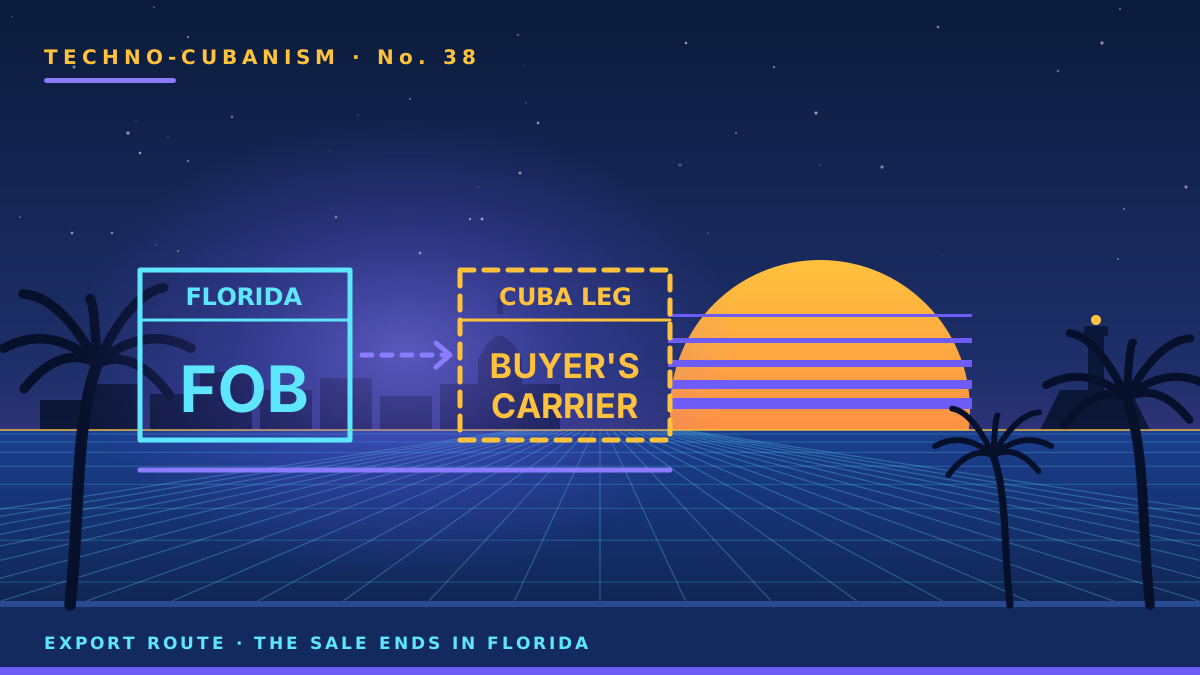
Every Cuban cargo port is run by a sanctioned operator. So the U.S. side of an export ends in Florida, and the Cuban buyer owns the sea leg.
Tim Parsa · Co-Founder & CCO, QvaPay · 17 October 2026 · 3 min read Subscribe
Why now
Since 30 September a person subject to U.S. jurisdiction may not take part in a direct or indirect financial transaction with any entity on the State Department's Cuba Restricted List [1][2]. Paying a listed company counts. So does passing money through to one.
That rule reaches the last mile of every export: the port.
Every Cuban port is run by a sanctioned operator
- Mariel. The terminal company and the Mariel zone are on the Restricted List [3]. The terminal company and its new operator, Coral Marítima, are on OFAC's SDN list [5][13].
- Havana. The container terminal closed when Mariel opened and is on the Restricted List [3][6]. The general-cargo berths that remain are run by a company of GEMAR, the state port group.
- Santiago, Cienfuegos, Matanzas, Nuevitas. Run by GEMAR companies [6]. GEMAR has been an SDN since 13 July 2026 [4].
The U.S. lines still sailing to Cuba, Crowley and Seaboard Marine, call at Mariel [7].
Why freight terms matter
OFAC's own example: a traveler pays a travel agency, the agency pays a listed hotel, and OFAC treats it as the traveler's direct transaction with the hotel [8]. Freight works the same way. Buy a sea leg that includes Cuban terminal charges and you have paid the terminal.
So the sale ends at the Florida port
For customs clearance, the buyer uses a broker that is not ADESA/ASAT: CIMEX's customs agency is on the Restricted List [3].
Working with founders
Every deal starts the same way: screen every name, from buyer and owners to consignee, forwarder and bank, against the SDN list and the Restricted List. Ask who owns the business; a MIPYME with a state partner is out. Keep state parties out of every role except consignee, and only an unlisted one. Keep records for ten years. The full checklist is in our guide [12].
What's still open
The Restricted List rule applies "except as otherwise authorized" [2]. The export license, §515.533, covers transactions directly incident to a specific authorized export, including transportation [9], and it is not among the licenses OFAC amended to exclude Restricted List dealings [10]. Whether that reaches port charges paid to a GEMAR company or a listed terminal, OFAC has not said. BIS has also suspended License Exception SCP for exports involving deposits into a Cuban-owned bank [11].
Until OFAC answers, we keep it simple: the U.S. side ends in Florida, and the Cuban buyer owns the sea leg. Learn more: How to sell to Cuba’s private sector from Florida · Export route
Not legal advice. Confirm your structure with counsel.
Sources
- OFAC, Alert: Expanded Sanctions Against Cuba, 29 September 2026 ↗
- eCFR, 31 CFR § 515.209, direct or indirect financial transactions with Cuba Restricted List entities ↗
- U.S. Department of State, Cuba Restricted List ↗
- OFAC, Recent Actions, 13 July 2026: GEMAR and GECOMEX designated ↗
- Periódico Cubano, the company placed in charge of the Mariel port was among those sanctioned, 13 July 2026 ↗
- JICA, Cuba National Transport Master Plan, final report (port administration) ↗
- U.S. Customs and Border Protection, CF-1401 Record of Vessels in Foreign Trade, Clearances, October 2026 ↗
- OFAC, FAQ 735: examples of direct and indirect financial transactions ↗
- eCFR, 31 CFR § 515.533, exportations from the United States to Cuba ↗
- OFAC, FAQ 1271: the 30 September 2026 amendment and the Cuba Restricted List ↗
- Bureau of Industry and Security, License Exception SCP FAQ, 4 March 2026 ↗
- cubanew.com, How to sell to Cuba’s private sector from Florida ↗
- OFAC, Sanctions List Search (SDN list) ↗
If this was useful, pass it to someone building in Cuba.