The Peer Is the Local Fiat On/Off-Ramp
Cuba's real exchange rate is set by people, not by the central bank. We built the market they trade on.
Tim Parsa · Co-Founder & CCO, QvaPay · 16 June 2026 · 3 min read Subscribe
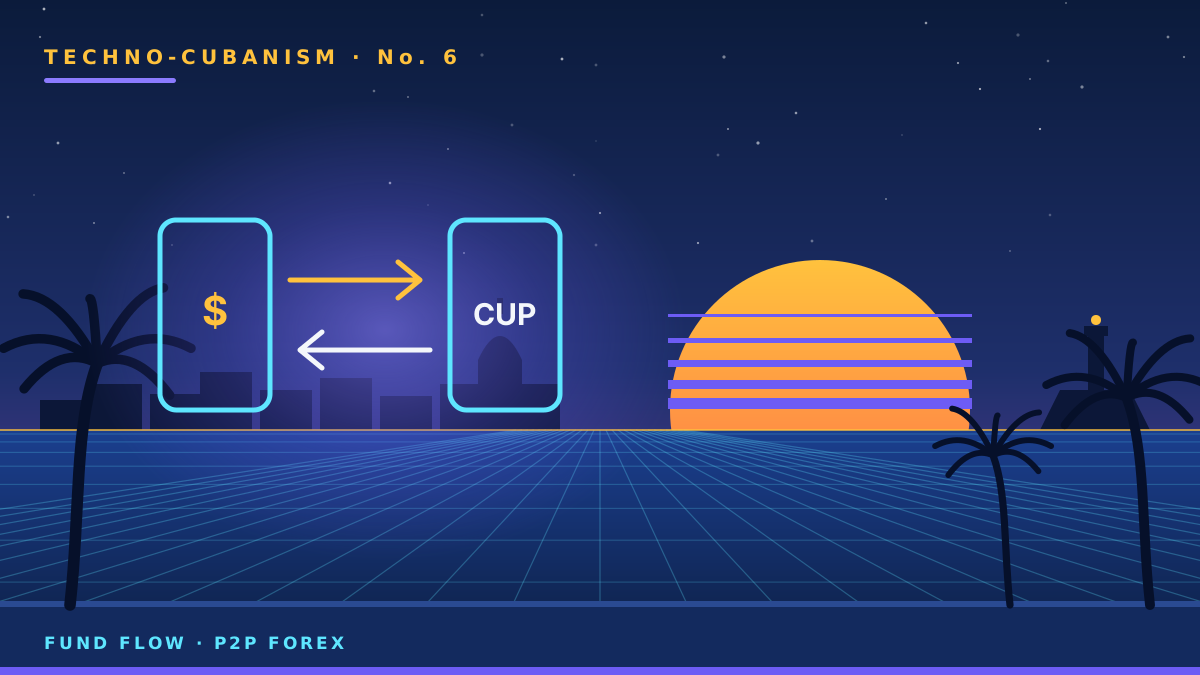
Ask anyone in Havana how they turn dollars into pesos and the answer is a person: a neighbor, a friend of a friend, a stranger with a good rating. Thousands of those trades set Cuba's real exchange rate every day while the official rate sits on a notice board. QvaPay is the market where they meet.
Lázaro drives a 1956 Chevrolet in Trinidad and is paid in pesos; he wants dollars. Marta translates for a client in Madrid and is paid in dollars; she needs pesos for rent. One posts, the other takes. Both beat the official rate in four minutes.
Illustrative example; not customers.
Inspired by Localbitcoins, we launched Airtm in 2015 with no traders and no users. For the first eighteen months I was its most prolific trader: thousands of trades and a 4.8-star rating. Airtm taught me what a peer market needs: escrow, screening, and a platform two strangers can both rely on.
Cuba's private sector built this market. We added dollars, escrow, and U.S. compliance underneath.
The treatment of the P2P exchange itself is the subject of QvaPay’s interpretive-guidance request pending with OFAC. The exchange runs under full controls and no authorization is asserted.
Peers are the fiat on- and off-ramp: dollars in, pesos out.
| Flow | How we grow it | U.S. tech meets Cuban talent |
|---|---|---|
| P2P forex Pending with OFAC · no authorization asserted | SkyMind matches orders and more screened traders join. | Every trader is a small business: Cubans earn a spread connecting dollars and pesos. |
| Assisted withdrawals Pending with OFAC · peer pays from own funds | SkyMind routes each withdrawal to a screened peer who pays from their own funds. | Dollars become pesos in hand from a peer's own funds; QvaPay never pays into a Cuban bank. |
The potential. Remittances into Cuba run an estimated $1.1–2B a year (2024; estimates vary). At the Dominican Republic’s rate per person, Cuba would receive about $9.8B, five to nine times today. That is the market QvaPay is built to serve.
| Market | Cuba today | Cuba at the Dominican Republic’s rate per person |
|---|---|---|
| Remittances received | $1.1–2B 2024 est., estimates vary | $9.8B DR total $11.9B (2025) |
A scenario, not a forecast. The Dominican Republic received $11.9B in remittances in 2025 across 11.4 million people, about $1,040 a person; at that rate Cuba’s 9.43 million people would receive about $9.8B a year, five to nine times today. Method and sources.
Cuban private firms rank real, autonomous access to foreign exchange among the three things they most need, and 76% are optimistic about their own 2026. On cubanew.com ↗
Sources
If this was useful, pass it to someone building in Cuba.